
High Voltage Training
Become a certified High Voltage Expert with ZF Technical Training
Integrated electrified vehicle solutions will be a
fundamental component of tomorrow’s mobility.
This futuristic megatrend is currently revolutionizing the
international automotive market. The advantages of the new
technologies: They operate in an interconnected, intelligent
and efficient manner. At the same time, resources are
conserved, the environment is protected and emissions
sustainably reduced over the long term.
ZF offers the qualification of High Voltage Expert.
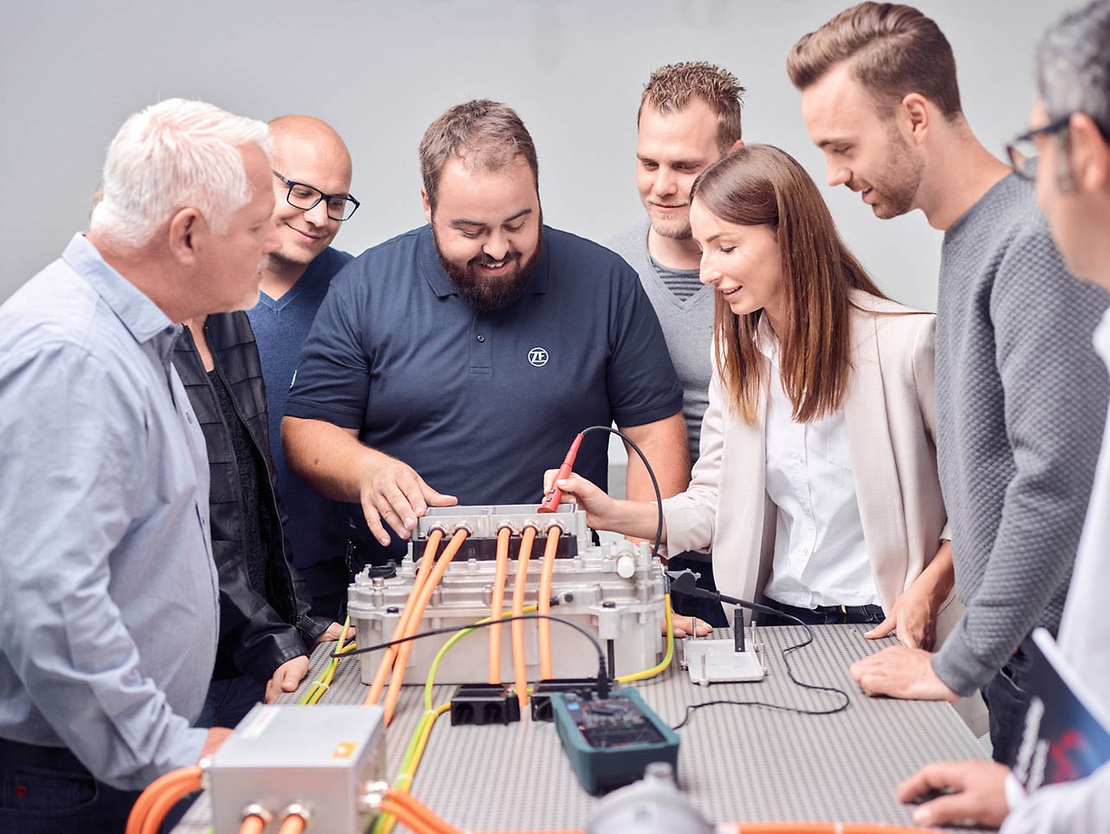
New technologies mean that new skills are needed.
Those who master the high degree
of system networking and the
different functions of mild hybrid,
hybrid and electric vehicles can play
a leading role in the business of the
future.
Since voltage peaks of up to 1000 volts occur in electric drives, it is extremely important to know how to adeptly handle high-voltage systems.
To meet these requirements, we offer fundamental vocational education and training in the field of electromobility.
Since voltage peaks of up to 1000 volts occur in electric drives, it is extremely important to know how to adeptly handle high-voltage systems.
To meet these requirements, we offer fundamental vocational education and training in the field of electromobility.
Become the expert e-mobility contact with ZF Technical Training.
Our modular seminar covers the
complete range of topics needed for
the technology of the future and takes
into account professional association
standards.
You will therefore learn everything you need to know about integrated, (partially) electrified drive concepts, such as hybrid and fuel cells as well as their high capacity for system integration; the seminar goes in-depth, is easy-to-understand and very hands-on.
You will therefore learn everything you need to know about integrated, (partially) electrified drive concepts, such as hybrid and fuel cells as well as their high capacity for system integration; the seminar goes in-depth, is easy-to-understand and very hands-on.

Benefit
The seminar, which is based on the blended learning
principle, offers maximum effectiveness and flexibility
to all participants. “Blended learning” refers to the ideal
combination of e-learning and classroom sessions.
The advantages for you
- E-learning gives you complete flexibility when it comes to time management: individual modules ranging from 25 to 50 minutes can be selected according to your level of knowledge.
- Identical training content that saves as much time as possible: 40 percent faster than conventional training.
- Perfect transfer of theory into practice: The practical section demonstrates how to use the necessary special tools, shows you how to optimally organize your repair shop and how to work with electrical equipment.
Reach your goal with just one final exam.
Since an electric motor operates according to the same
basic principle in all electrified vehicles, “brand restrictions”
take a backseat, making the previously customary individual
training courses for each brand unnecessary. This means
only one final exam is required.
The course is certified and suitable for professionals who want to ensure that they are fully knowledgeable in the field of electromobility as well as for specialists who want to refresh or add to their existing skills.
The seminar participant's company also benefits because the integrated learning method increases the employee's time on site and optimally leverages workload fluctuations in the shop. In addition, travel expenses for employee training are reduced.
The course is certified and suitable for professionals who want to ensure that they are fully knowledgeable in the field of electromobility as well as for specialists who want to refresh or add to their existing skills.
The seminar participant's company also benefits because the integrated learning method increases the employee's time on site and optimally leverages workload fluctuations in the shop. In addition, travel expenses for employee training are reduced.
The path to becoming a High Voltage Expert.
6 E-learning modules
- Fundamental Principles of Electricity
- Hazards of Electrical Current
- Capacitors and Coils in DC
- Circuit Technology and Electrical Systems
- Alternating Current and Electrical Motors
- Fundamental Principles of Measuring Technology
Practical work
- Review of open questions from theory
- Components and their functions
- Measurement readings (digital multimeters and oscilloscopes)
- Measurement of voltage, current and resistance
- Measurement of period duration, frequency and peak values Implementation of circuits
